

Historically, Black people have used play—through music, dance, fashion, and storytelling—not just for survival but as a radical act of hope and defiance and a vital instrument to create Black culture. We launched “Black Play Matters,” a new initiative that invests in safe spaces, enrichment, and imagination for Black people around the world to reclaim play as a powerful act of revolution and liberation.
Read on to meet our grantee partners, learn about our research, our national competition, and our plans for a public policy push.
Play is a tool for liberation
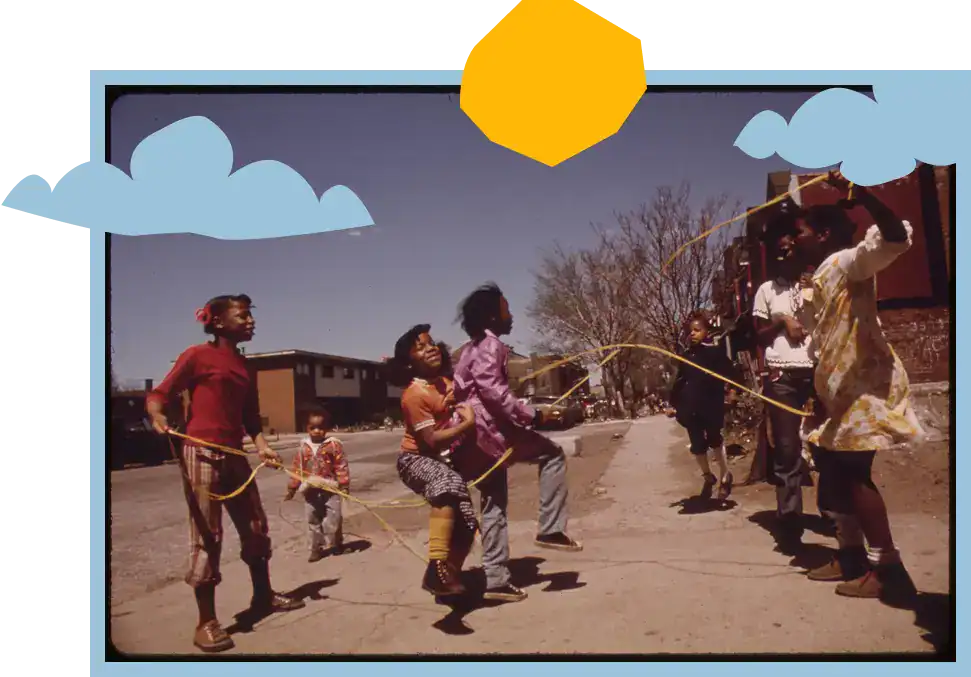
The Black Play Matters initiative is dedicated to amplifying the tradition of play within Black communities by building safe spaces and broadening opportunities for everyday participation in meaningful activities that foster resilience, inclusion, health, and vitality. What does radical innovation look like when imagination is nurtured to create new worlds? Play is a catalyst for liberation, new cultures, and BLMGNF aims to position it as a powerful pathway to a future filled with possibility.
The initiative launched with a kick-off event during WNBA All-Star Weekend, where WNBA trailblazers Sheryl Swoopes and Ty Young were honored alongside visionary sports executive Natalie White and founder of The SHE Xperience, Katina Washington.
Our Grantee Partners
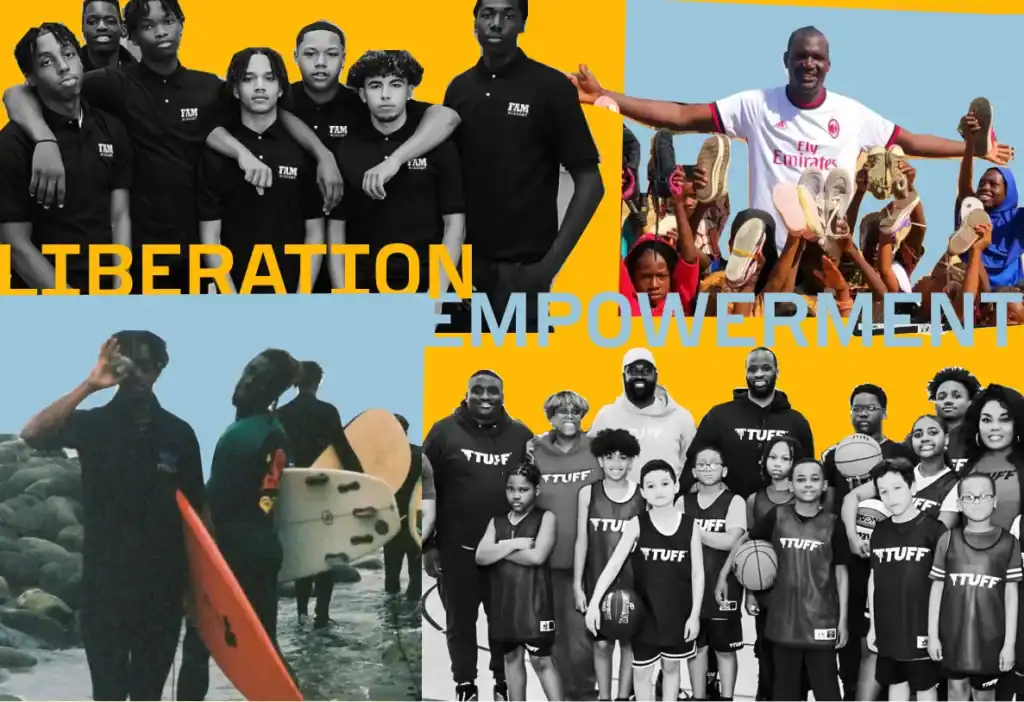
Our inaugural cohort of grantee partners includes organizations that offer a wide range of enrichment opportunities for Black people. Some of our partners include:
Free All Minds
Free All Minds is a year-round leadership academy in Camden, New Jersey, dedicated to guiding young men academically, professionally, and emotionally.
They boast a 100% high school graduation rate, with 96% of students advancing to college or trade school. Their annual Summer Field Day fosters community engagement and celebrates the achievements of their students.
Ebony Beach Club
Founded in 1957 as an exclusive Black beachside haven in California, Ebony Beach Club was reclaimed and rebranded to reconnect Black and brown communities to the beach, celebrating freedom and belonging.
Despite early setbacks due to land seizure, the movement now hosts large events like the Juneteenth celebration at Santa Monica Pier, reviving Silas White’s vision. It stands as a powerful symbol of resilience and cultural pride.
TUFF (Teaching Us Fitness and Fundamentals)
TUFF empowers youth in New York through mentorship in fitness and financial literacy, using sports as a transformative tool to build leaders. The program emphasizes community, purpose, and legacy; teaching young athletes not only how to play but how to live with financial awareness. Staff and volunteers inspire resilience and self-investment, fostering long-term success.
Afrikicks
We recently partnered with Afrikicks to support communities in Niger and Ghana, strengthening unity and cultural exchange across the African diaspora. Together, the group delivered over 5,000 pairs of shoes, 40,000 toys, and $150,000 worth of clothes, and built three water wells to improve health and access to clean water.
This collaboration not only addresses immediate needs but also serves as a model for future alliances between social justice and humanitarian organizations. It encourages Americans, especially those of African descent, to honor their heritage and build lasting global partnerships.
“Black Play Matters is built on a simple, powerful truth that true justice means more than just fighting harm. As an organization committed to building Black power and liberation, we remain intentional about investing in the conditions that allow Black communities to flourish, unburdened by bias, surveillance, or systemic barriers.”
Cicley Gay, board member of BLM.
Join us in celebrating, defending, and investing in the power of play
Play is a powerful pathway to a future filled with possibility for all Black people.
Sign up today to be the first to hear about our news, our partners, and our campaigns. Together, we’re building a future where Black people are free to play, dream, and thrive.
Phase 1: Research
In our research, we want to highlight the importance of play in our communities. We partnered with experts in child psychology and education, collected stories and testimonials from Black families, and analyzed existing research on the correlation between play and success.
Play to Thrive
Black children often face the “adultification” bias, where they are perceived as older than they are, contributing to:
- Increased surveillance and criminalization of play
- Disproportionate disciplinary actions in educational settings and public spaces
- Limiting Black children’s access to safe and free play
Play as a Form of Cultural Expression and Resistance
In the face of systemic oppression, marginalization, and racial trauma, play has often served as a powerful tool for defying societal norms and reclaiming space, dignity, and humanity.
- For Black people who may experience trauma, play provides a way to manage emotions, release stress, and foster resilience.
- Athletics are not just an individual pursuit but a collective force for empowerment, resilience, and social change in Black communities.
- In the face of systemic oppression, marginalization, and racial trauma, play has often served as a powerful tool for defying societal norms and reclaiming space, dignity, and humanity.
Athletics as a Cultural Anchor
Sports have long been a powerful force in Black communities; an opportunity to forge identities rooted in excellence and community, rather than systemic barriers.
- In many Black communities, sports have kept youth out of the streets, providing both structure and purpose.
- In a world where Black bodies and identities are misrepresented or marginalized, play allows for reclamation of space and self-definition. Iconic Black athletes are athletic role models and symbols of resilience, and cultural pride.
Phase 2: Black Play Matters Awards
Under this campaign, we will launch the “Black Athletes Matter” Awards, to celebrate athletic excellence and the power of play in Black communities.
Each year, we will honor three athletes per state across elementary, high school, and college, who are nominated by their peers, coaches, parents, and community leaders.
Phase 3: Public Policy Push
The final phase of our initiative is to advocate for national policies that support Black athletes and play equity. We will partner with existing organizations advocating for play equity and sports reform, launch a petition tied to the Black Athletes Matter Awards that allows attendees to engage in advocacy, and promote through storytelling campaigns featuring award winners and notable athletes. Our priorities are:
Play Equity Fund
Ensure Black kids have access to high-quality sports programs, equipment, and facilities.
Safe Spaces for Play
Invest in safe, community-centered spaces for youth sports and recreation in underserved areas.
Diversity in Sports Leadership
Push for representation in coaching, training, and administrative roles in sports organizations.
Mental Health Resources for Athletes
Require schools and colleges to provide accessible mental health support for athletes.
BLM invites brands, organizations, and individuals to join the campaign to build a future where Black people are free to play, dream, and thrive—moving beyond mattering toward true flourishing.